

Tuen Mun EcoPark Recycled Paper Pulp Facility Steel Structure Project
This recycled-paper pulp facility steel structure project is located at Tuen Mun EcoPark, Hong Kong. The structural scope includes heavy portal frames, spatial trusses, equipment platforms and pipe-rack trusses. FindingSteel handled Tekla detailing, shop fabrication, cross-border delivery and installation support.
Project introduction
The project covers EcoPark plots P1, P5, P6 and P7 at 133 Lung Mun Road, Area 38, Tuen Mun, Hong Kong. It ran from June 2025 to February 2026, with about 1,000 tonnes of steel recorded for the main factory building.
The main coordination task was integrating the steel structure with the pulp-production line. Detailing covered equipment platforms, stairs, handrails and pipe routes; fabrication and delivery planning also coordinated member splits, batch marks, cross-border transport, unloading and installation interfaces.
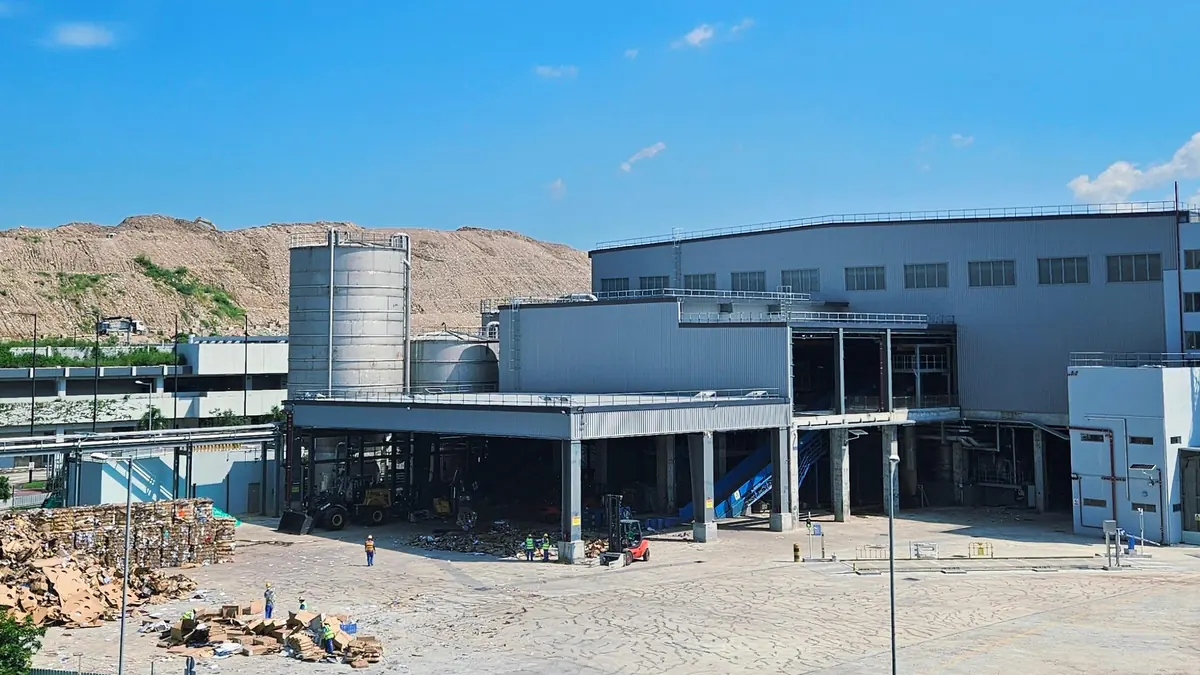
Project facts
- Location
- Tuen Mun EcoPark plots P1, P5, P6 and P7, Hong Kong
- Use
- Recycled-paper pulp facility
- Structural systems
- Heavy portal frames, trusses, equipment platforms and pipe-rack trusses
- Steel quantity
- About 1,000 tonnes for the main factory building
- Project period
- June 2025 to February 2026
- Scope
- Detailing, shop fabrication, international logistics and installation support
Three key project interfaces
Structure and equipment coordination
The main building, equipment platforms, stairs, handrails and pipe-rack trusses were checked in one model before fabrication.
Fabrication and delivery batches
Member marks, trial assembly, surface treatment, packing and arrival sequence had to align with the site programme.
Surface treatment and product protection
After galvanizing or grey coating, member marking, packing, cross-border transport and site storage were coordinated to protect finished surfaces during handling.
Five-stage delivery process
- 01
Tekla detailing and interface checks
- 02
Document review and technical briefing
- 03
Fabrication, inspection and surface treatment
- 04
Marking, packing and cross-border delivery
- 05
Installation support and issue closure
Project record from detailing to site
The following sections present the project sequence from model coordination and technical briefing through fabrication, cross-border delivery and installation follow-up.
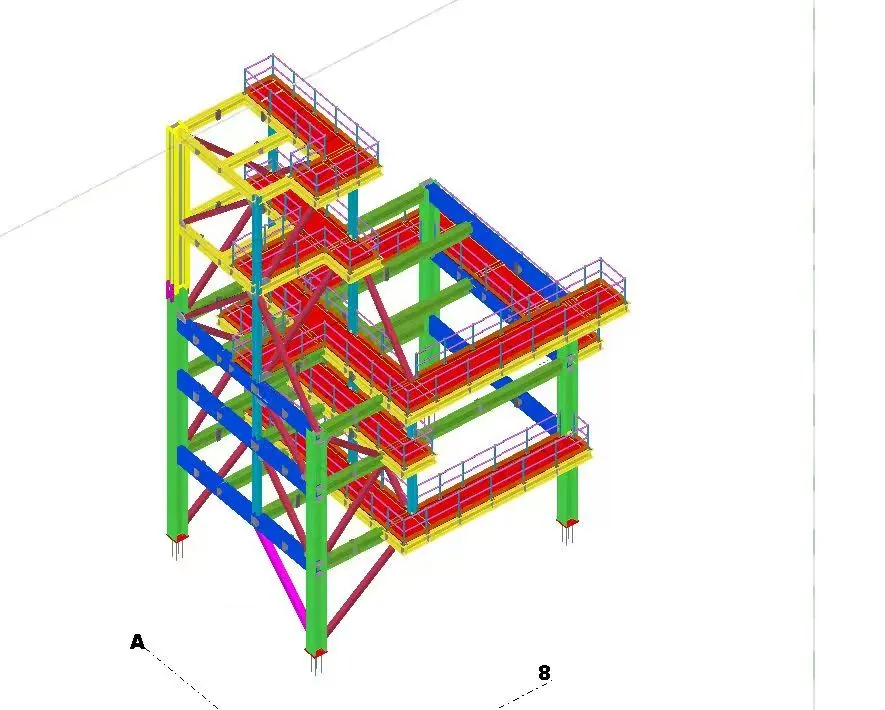
01
Tekla detailing and delivery planning
The project model coordinated the main building, equipment platforms, access steel and pipe-rack trusses. Transport splits and lifting conditions were reviewed before fabrication.
Production, surface treatment, trial assembly and shipment batches were planned against cross-border logistics and site milestones.
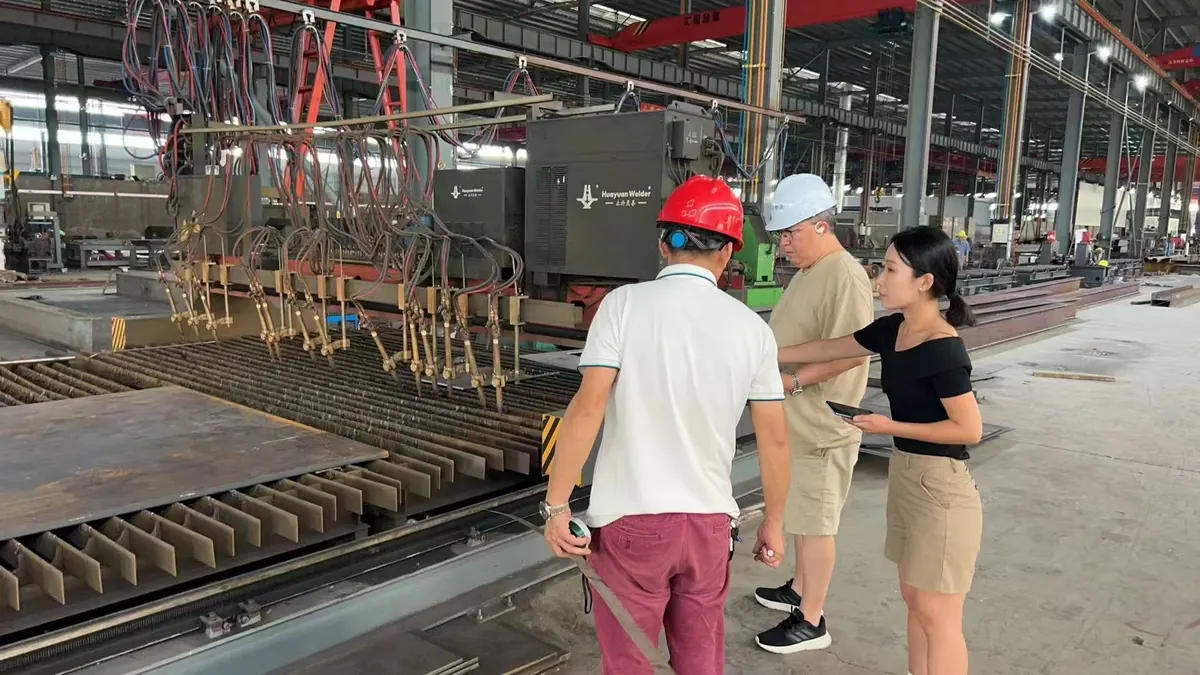
02
Equipment briefing and technical coordination
Project parties reviewed welding, trial assembly, surface treatment, member marking and delivery requirements before production.
The technical briefing connected the model, fabrication process and delivery plan so the workshop could organize production with consistent member information.
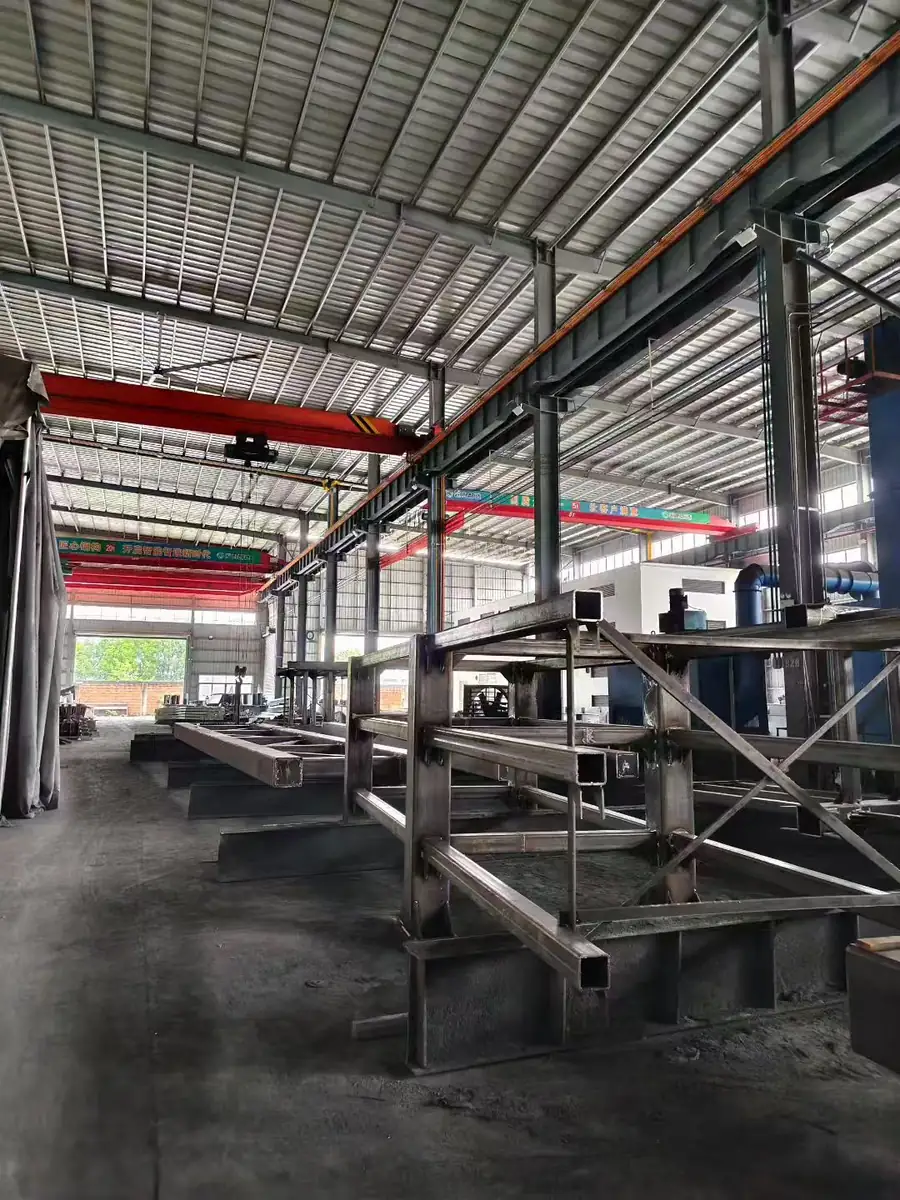
03
Portal-frame and truss fabrication
Cutting, assembly, welding, straightening and dimensional checks followed the approved detailing information, with attention to holes, member geometry and transport splits.
Members were marked by batch and installation position, then galvanized or coated grey according to their intended use before packing and shipment.
04
Cross-border delivery and site unloading
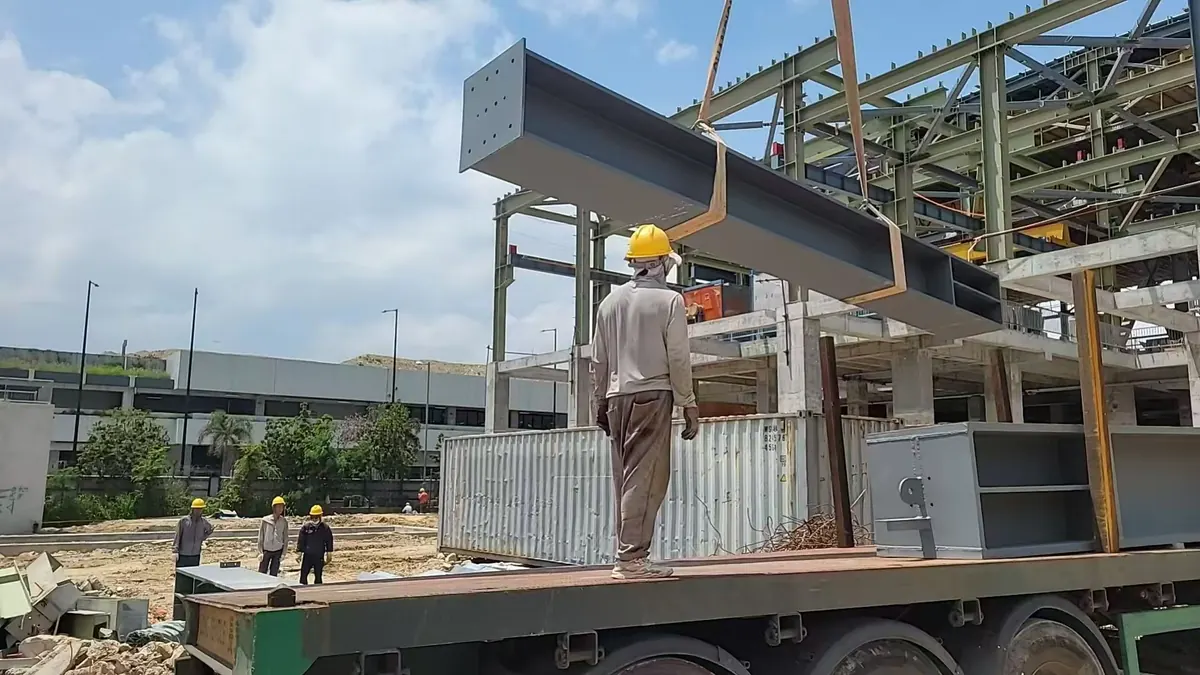
Members were marked and packed by batch, with handover information aligned to arrival lists and the site receiving sequence.
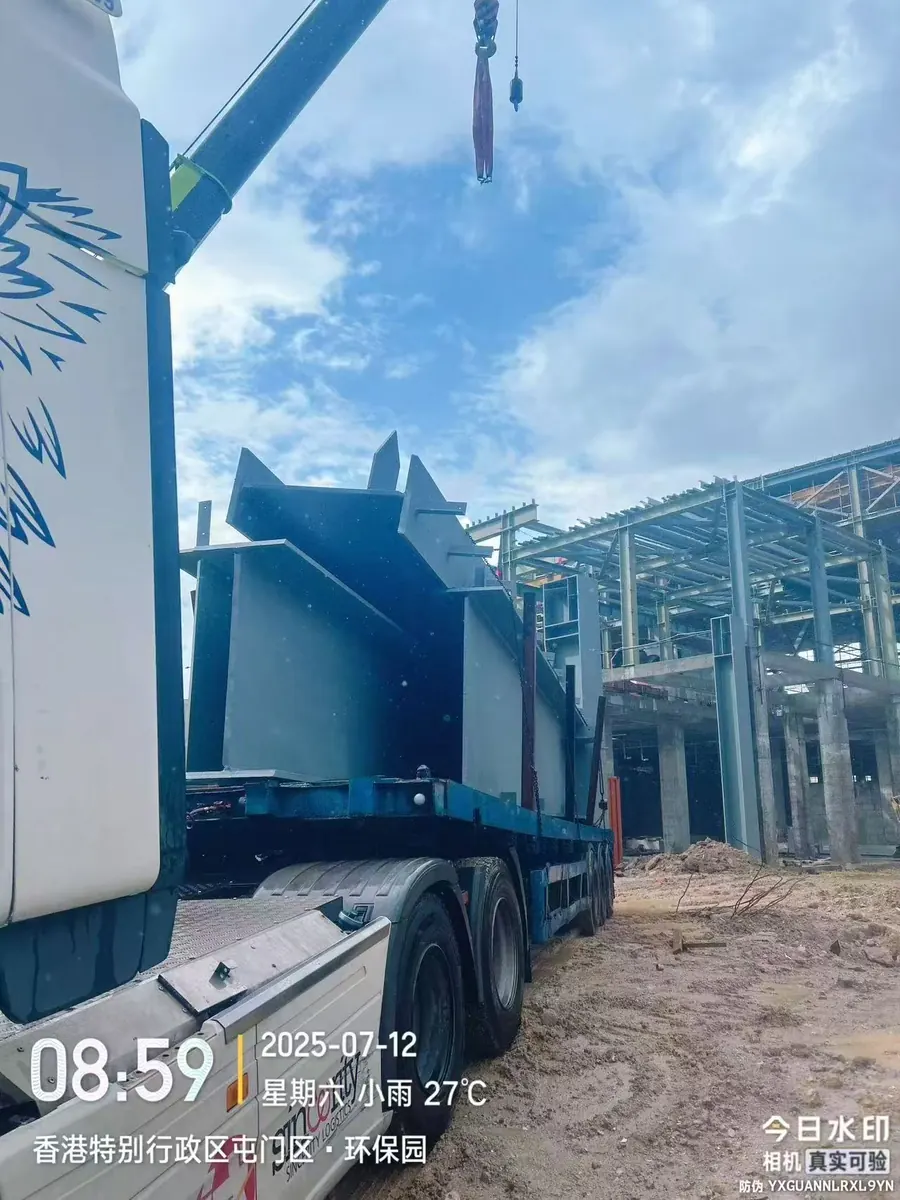
After arrival at Tuen Mun EcoPark, members were unloaded, checked and transferred into the lifting sequence. FindingSteel supported member identification, connection clarification and installation sequencing.
05
Installation support and issue closure
Technical staff supported member identification, connection clarification and interface checks for portal frames, platforms and pipe-rack trusses.
The site record dated 12 July 2025 shows member arrival and installation follow-up, with technical staff continuing to check member positions and connection interfaces against site progress.
Related capabilities
Tuen Mun EcoPark steel structure project FAQs
Which equipment and piping interfaces should be resolved early for a Hong Kong steel structure project?
The steel structure must be coordinated with pulp-production equipment, equipment platforms, stairs, handrails and pipe routes. Before fabrication, a 3D model should be used to check clashes, member splits, connection positions and the installation sequence.
What services did FindingSteel provide for the Tuen Mun EcoPark project?
FindingSteel handled Tekla detailing, fabrication of portal frames, trusses and equipment platforms, member marking, packing and cross-border delivery. After the steel arrived, FindingSteel provided technical support for member identification, connection clarification and installation sequencing.
Why should Tekla detailing consider fabrication, transport and installation together?
Tekla detailing affects member geometry, shop cutting and assembly, transport splits, batch marks, arrival sequence and site connections. Bringing these conditions into one model gives fabrication, logistics and installation teams a consistent set of member information.
How were steel members fabricated in Guangdong delivered cross-border to the Hong Kong site?
Members were marked by installation position and shipment batch, then counted, packed and prepared for transport after surface treatment. Delivery coordinated customs clearance, cross-border transport, port transfer, site receiving, list-based unloading and the lifting sequence.
What information is needed to start a similar project in Hong Kong?
Provide the project location, design drawings or model, structural scope, estimated tonnage, applicable standards, surface-treatment requirements, transport boundary, site installation conditions and target milestones. Complete information supports decisions on detailing, member splits, fabrication batches, delivery planning and site technical support.
Planning an industrial steel project in Hong Kong?
Submit the project location, drawing stage, main members, estimated tonnage, standards, surface-treatment requirements and target milestones for a review of detailing, fabrication, cross-border delivery and installation-support scope.